Buying Guides
How Much Does an Aga Cost to Run a Year? Real 2026 Running Costs

By the Hill & May team
Updated 2026
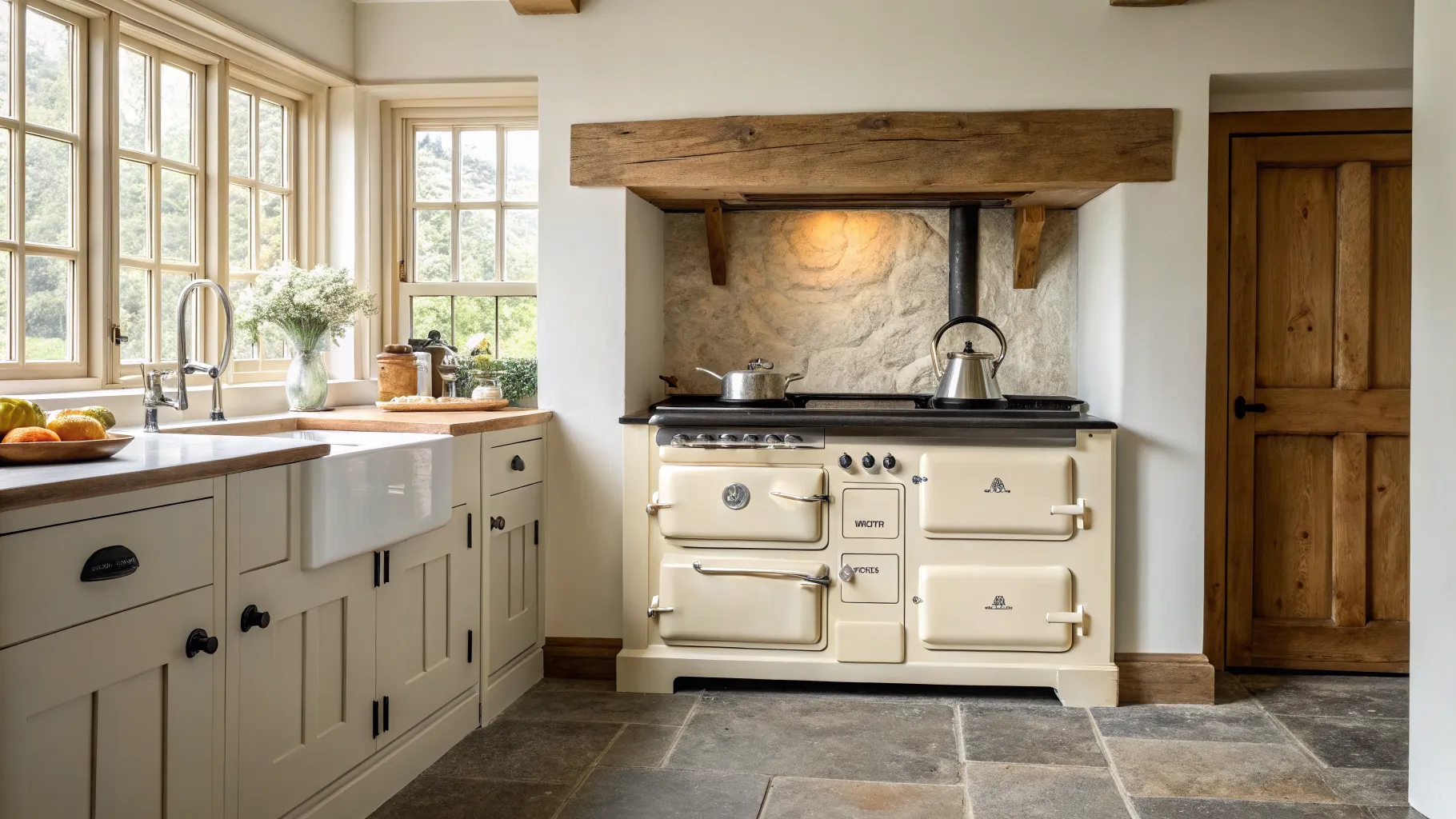
The running cost is the part of owning an Aga that catches people out. The cooker itself is a known number on a quote. What it costs every week for the next fifteen years is harder to pin down, and the figures you find online are usually built on old energy rates or vague averages.
This guide gives you real 2026 numbers, broken down by model and fuel type, using the current Ofgem price cap. If you are deciding between an electric eR7, an older always-on cast iron model, or a gas or oil Aga in a property you are buying, this is the section of the decision that actually affects your monthly outgoings.
The short answer
A modern controllable electric Aga (an eR3 or eR7) typically costs £15 to £30 a week to run, which works out at roughly £800 to £1,550 a year depending on how much of the cooker you keep hot and the time of year. An always-on model, whether it is an older gas or oil Aga or an electric R7, runs higher, in the region of £1,300 to £2,000 a year once you add servicing.
The single biggest variable is not the brand or even the fuel. It is whether the cooker is on all the time or whether you can switch ovens off when you are not cooking. Everything below comes back to that one point.
The energy rates these figures use
Running cost claims are only as good as the unit rate behind them, so here is the basis for every number in this guide. From 1 April to 30 June 2026 the Ofgem price cap sets a typical direct debit unit rate of 24.67p per kWh for electricity and 5.74p per kWh for gas, with daily standing charges of 57.21p and 29.09p respectively. You can check the live figures on the Ofgem energy price cap unit rates page, and they change every three months.
That gap matters. Gas costs roughly a quarter of electricity per unit of energy. So why are gas Agas not obviously cheaper to run? Because a traditional gas Aga is never switched off, and a large share of its heat goes straight up the flue whether you are cooking or not. The cheap fuel is partly cancelled out by the sheer volume burned.
Electric Aga running costs by model
Aga’s current range is electric, and the newer models are designed so you can heat only the parts you need. These weekly figures are based on the Q1 2026 electricity rate of 27.69p per kWh, so at the April 2026 rate of 24.67p they come out slightly lower.
- eR3 Series, both cast iron ovens at full temperature: around £22.70 a week. Run a single oven and it drops sharply, to roughly £13.85 for the baking oven alone or £5.68 for the simmering oven.
- eR7 Series, three ovens at full temperature: around £30.63 a week. In economy mode that falls to about £14.92 a week.
- R7 Series (always-on cast iron, the successor to the Dual Control): around £29.07 a week in economy and up to £39.54 a week with three ovens at full temperature.
The pattern is clear. The eR3 and eR7 are programmable, so you turn ovens on for cooking and off afterwards. The R7 keeps its cast iron ovens hot around the clock for that constant radiant warmth, which is why its floor cost is higher.
What an electric Aga actually costs in real life
One eR7 owner reports paying about £22 a week for most of the year sitting on slumber, rising to £25 to £27 a week in the coldest months when the cooker is doing more, and dropping to around £5 a week in summer when it is cold except when they cook. That seasonal swing is normal and worth planning for. Annualised, that owner is spending somewhere around £900 to £1,000 a year.
You can push this lower. The newer electric models work well with Economy 7 or a smart off-peak tariff, so if you heat the ovens overnight you pay the cheaper night rate for a chunk of the consumption. None of the electric models need a scheduled service, which removes a recurring cost the gas and oil versions carry.
Gas Aga running costs
Aga stopped making most traditional always-on gas and oil models several years ago, so a gas Aga today is usually one you have inherited in a property purchase rather than something you can buy new. The running cost still matters if you are taking one on.
A two oven traditional gas Aga uses roughly 425 kWh a week, which is about 22,100 kWh a year. At the April 2026 gas unit rate that comes to roughly £1,270 a year in fuel. A four oven model pushes the annual fuel bill toward £1,900 or beyond.
On top of fuel, a gas Aga needs servicing, typically £150 to £200 a year. So the all-in figure for a two oven gas Aga sits around £1,420 to £1,470 a year.
Oil Aga running costs
An oil fired two oven Aga burns roughly 40 litres of heating oil a week, or around 2,080 litres a year. At recent kerosene prices that is in the region of £1,160 a year in fuel, though oil prices move around more than the capped gas and electricity rates, so this is the figure most exposed to swings.
Oil models need servicing twice a year, which lands at £300 to £400 annually. That takes the all-in cost of a two oven oil Aga to roughly £1,460 to £1,560 a year, similar to gas once servicing is counted.
Putting it side by side
Here is the rough annual picture, fuel plus servicing, for a typical mid-sized model run normally through a UK year.
- Electric eR3 (controllable, used sensibly): roughly £800 to £1,000 a year, no servicing.
- Electric eR7 (controllable): roughly £900 to £1,200 a year, no servicing.
- Electric R7 (always-on cast iron): roughly £1,400 to £1,700 a year, no servicing.
- Gas two oven (always-on): roughly £1,420 to £1,470 a year including servicing.
- Oil two oven (always-on): roughly £1,460 to £1,560 a year including servicing.
Over ten years the servicing alone adds up: £1,500 to £2,000 for gas, and £3,000 to £4,000 for oil, on top of fuel. The electric models avoid that entirely.
How to cut your Aga running costs
The numbers above assume average behaviour. A few habits make a real difference:
- Use the controllability. If you have an eR3 or eR7, programme the ovens to come on before you cook and switch off after. Leaving everything on full all day is what produces the scary figures.
- Slumber in summer. Keeping a controllable model on a low slumber setting in warm months, and only firing the ovens when you cook, is where that £5 a week summer figure comes from.
- Move to an off-peak tariff. Heating the cast iron overnight on Economy 7 or a smart tariff shifts a large part of your electricity onto the cheap rate.
- Insulate the cooker well. A correctly fitted Aga in a kitchen that holds heat works less hard. A draughty utility room makes it work harder for the same result.
If you are still weighing brands rather than just fuel types, our range cooker buying guide compares Aga against Rangemaster, Falcon, Lacanche and Rayburn on price, running cost and the kind of cooking each one suits.
Frequently asked questions
Is an electric Aga cheaper to run than a gas one? A controllable electric Aga like an eR3 or eR7 is usually cheaper overall than a traditional gas Aga, because you can switch ovens off when you are not cooking and there is no servicing bill. A gas Aga has cheaper fuel per unit but burns it constantly and needs an annual service. The advantage of the electric model comes from control, not from the price of the electricity.
How much does an Aga cost to run per day? A modern controllable electric Aga works out at roughly £2 to £4.50 a day depending on the model and how many ovens you keep hot. In summer with a single model slumbering, it can be well under £1 a day on days you do not cook.
Why is my Aga so expensive to run? Almost always because it is an older always-on model that heats every oven around the clock, or a controllable model left on full all day rather than programmed. Switching to off-peak electricity and using the timer functions are the two changes that move the bill the most.
Do electric Agas need servicing? No. Aga’s electric models, the eR3, eR7, R3 and R7, have no scheduled servicing requirement, which is a genuine saving against gas at £150 to £200 a year and oil at £300 to £400 a year.
Can you turn an Aga off? A controllable electric Aga (eR3 or eR7) can be turned off or down whenever you like, which is the whole point of those models. A traditional cast iron Aga, including the always-on electric R7, is designed to stay on, so turning it off and reheating it repeatedly is not how it is meant to be used and will not save money in practice.
How much does it cost to run an Aga in winter versus summer? Expect roughly £25 to £27 a week for a controllable electric model in the coldest months and as little as £5 a week in summer when it spends most of its time cold and only heats up to cook. The annual figure smooths out to around £900 to £1,200 for a typical eR7 used sensibly.