Buying Guides
Aga vs Rangemaster: Which Range Cooker Should You Actually Buy?

By the Hill & May team
Updated 2026
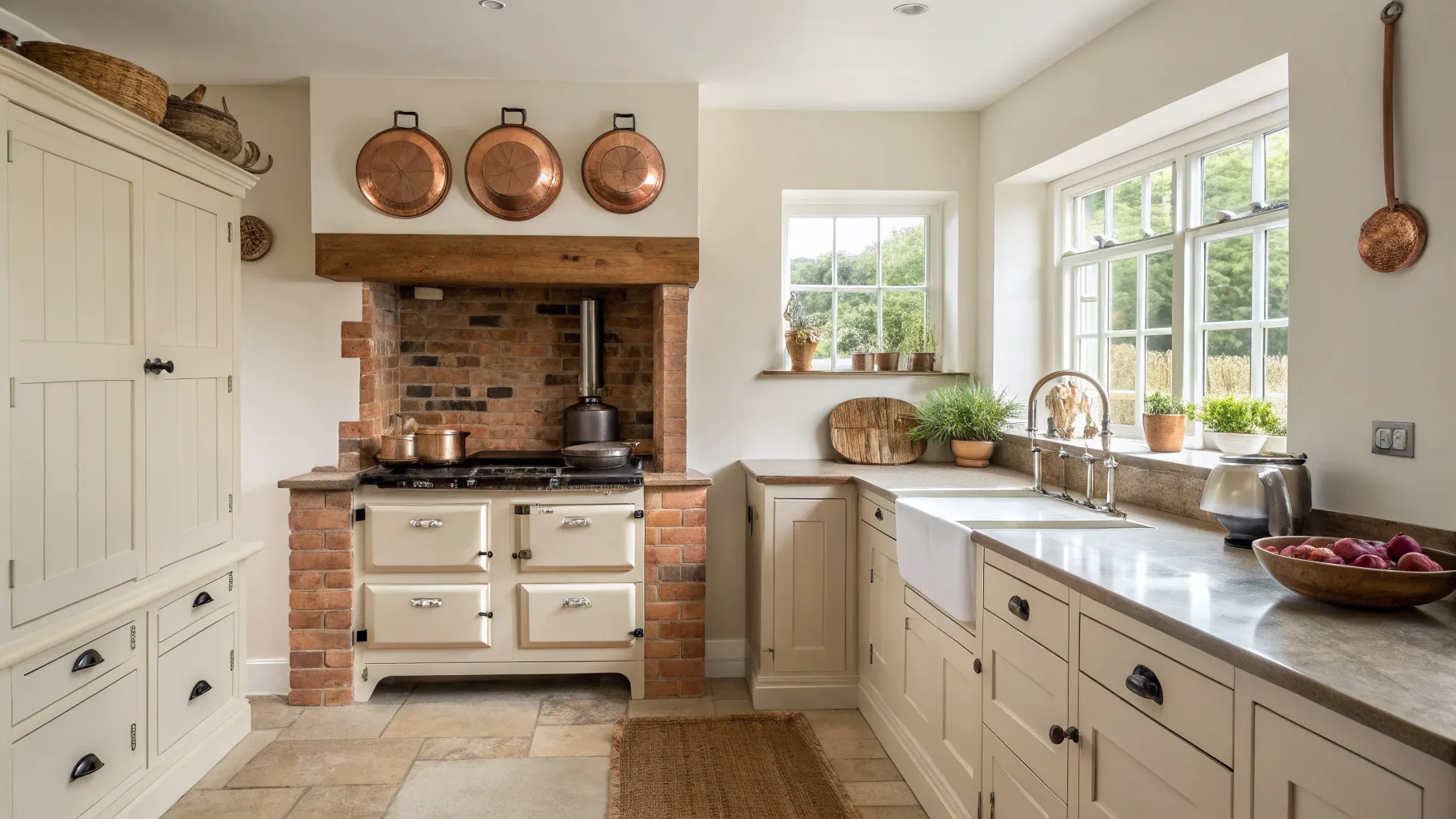
Aga and Rangemaster are the two names most people circle when they start planning a range cooker for a period or rural kitchen. Both brands sit within the same group, AGA Rangemaster, yet they behave in opposite ways. One is a cast-iron heat store that doubles as a heat source for the room. The other is a conventional cooker with separate ovens and a hob that you switch on when you need it.
That difference shapes everything: the price you pay, what it costs to run, how you cook on it, and whether it suits your house at all. Here is how the two actually compare so you can decide before you spend anything between £2,000 and £26,000.
The core difference: heat storage vs conventional cooking
An Aga is a cast-iron heat-storage cooker. A heavy iron core sits inside thick insulation, and once it is up to temperature it holds that heat and radiates it gently into the ovens, the hotplates and the room. There are no fan elements blasting hot air. Food cooks through radiant heat from all sides, which is why Aga owners talk about moist roasts and even baking. Traditional Aga models were designed to stay on all the time, which is part of the appeal in a cold stone farmhouse and part of the running-cost problem everywhere else.
A Rangemaster works the way a normal cooker does. You have one or two ovens, usually a fan oven and a conventional or multifunction oven, plus a separate grill and a hob on top. Nothing is on unless you turn it on. Rangemaster also has the longer pedigree in this format: the company traces its line back to the Kitchener range built by William Flavel in Royal Leamington Spa around 1830, and the 90cm, 100cm and 110cm cookers are still built by hand on that site today.
So the first question is not really “Aga or Rangemaster”. It is “do I want a cooker that is always warm and heats my kitchen, or a cooker that only uses energy when I am cooking?”
Price: what you actually pay
The gap here is large, and it catches people out.
Rangemaster sits in mainstream territory. A Classic Deluxe 110 dual fuel typically sells for around £2,500 to £2,800 depending on finish and retailer, with the plainest black models seen lower still. Across the Classic, Classic Deluxe and Professional ranges you are broadly looking at £2,000 to £4,000 for most models, with induction versions at the upper end. For a high-ticket kitchen this is a comfortable spend rather than a shock.
Aga is a different order of money. The range now starts with the compact electric AGA 60, which has an RRP of around £7,650. Traditional and controllable cast-iron models climb from there: the R3 cast-iron series runs from roughly £10,500 upwards, the electric eR3 starts at about £10,980 for the eR3 100-4i, and the larger eR7 series runs from roughly £17,700 to around £26,000 before any trade-in or installation. Aga regularly offers trade-in deals worth around 20% off the RRP when you hand back an old model, but even discounted you are in five figures for most of the range.
Put bluntly, you can buy several Rangemasters for the price of one eR7. That does not make the Aga bad value, but it does mean the decision has to be about more than the cooker. You are buying a piece of kitchen furniture, a heat source and, for many owners, a way of life.
Running costs: the part that decides it for most people
This is where heat storage and conventional cooking part company.
A Rangemaster only draws power or gas when something is switched on. Day-to-day running costs look like any other oven and hob, and induction and dual-fuel models carry decent energy ratings. There is no standing cost when the kitchen is empty.
An Aga is always doing something, even a modern one. Independent 2026 estimates for the controllable electric models put an eR3 at roughly £22 a week with both ovens on, and an eR7 at around £30 a week with all three ovens at full temperature, dropping to about £15 a week in economy mode and to roughly a fiver a week in summer when the cooker is cold unless you are cooking. Traditional always-on gas and oil Agas land in a similar £22 to £30 a week bracket in those 2026 figures, can run higher with heavy use, and need servicing once or twice a year on top. Electricity is capped at 24.67p per kWh from 1 April 2026 under the Ofgem price cap, so real figures move with the market.
The newer electric Agas narrow the gap because you can switch individual ovens and hotplates on and off. The R7 and eR7 models let you run only the parts you need, which is the single biggest change Aga has made for energy-conscious buyers. But a Rangemaster will almost always cost less to run, because the honest comparison is “warmth in the room and a cooker that is ready around the clock” against “a cooker that costs nothing when you walk away from it”.
If running cost is your deciding factor, Rangemaster wins. If you value a permanently warm kitchen and a cooker that is always ready, the Aga’s running cost is the price of that comfort.
How they cook, day to day
The cooking experience is genuinely different and worth being honest with yourself about.
Aga rewards a certain rhythm. The hotplates sit under insulated lids, the ovens hold steady heat, and you cook by moving food between ovens rather than dialling temperatures up and down. Roasts, slow braises, bread and casseroles are where it shines. There is no temperature knob in the traditional sense, which converts people who love it and frustrates people who want a fast, precise oven for weeknight cooking. Modern Control models add programmable timers and faster heat-up, but the character of the thing is still slow, steady, radiant heat.
Rangemaster is built for flexibility and control. A multifunction oven gives you several cooking modes, you get a separate grill, and the hob options span gas, ceramic and induction. You can sear on induction, bake on a fan oven and grill at the same time. For a busy household that cooks fast and varied meals, this is the more practical tool, and there is no learning curve.
If you batch cook, roast and bake and like the ceremony of it, the Aga suits you. If you want speed, precision and a cooker that behaves like every other cooker you have used, choose Rangemaster.
Installation and what your house can take
Size: Rangemaster offers 90cm, 100cm and 110cm widths, so it drops into most kitchen layouts. Aga’s cast-iron build is heavier and deeper, and the traditional models in particular are a serious lump of iron. Check your floor and the route into the kitchen before you commit.
Power and flues: The modern electric Agas (R3, eR3, R7, eR7 and the AGA 60) usually do not need a flue, and AGA states the electric models need no plinth or flue, which makes retrofitting far easier than the old oil and gas heat-storage models. Larger electric Agas can need more than a standard cooker circuit, so an electrician needs to confirm your supply early. Rangemaster dual-fuel and induction models have more conventional requirements, though high-output induction cookers also want a suitable circuit.
Servicing: Traditional oil and gas Agas need annual or twice-yearly servicing. Electric Control models have effectively no servicing cost. Rangemaster, as a conventional cooker, has no scheduled servicing beyond normal care.
Warranty: Rangemaster runs periodic promotions, including a five-year warranty on eligible cookers bought between 2 March and 31 May 2026. Always confirm the current offer and the qualifying models with the retailer before you order.
So which should you actually buy?
Here is the short version.
- Buy a Rangemaster if you want a flexible, fast, precise cooker, you cook varied meals on weeknights, running cost matters, and you would rather spend £2,000 to £4,000 than £10,000-plus. It fits more kitchens, installs more easily and behaves predictably from day one.
- Buy an Aga if you have a cold period or rural kitchen that benefits from constant warmth, you love slow radiant-heat cooking, and the higher purchase and running costs are worth it to you for the cooker and the lifestyle around it. Choose a modern electric Control model if you want the Aga feel with lower, more controllable running costs.
Both brands sit in the same group, both are built in Britain, and both will last decades. The decision is about how you cook and what you want your kitchen to feel like, not which brand is “better”. If you are still weighing fuel types and brands, read our range cooker buying guide before you book a showroom visit, and use the independent reviews at Which? and the brand details on the AGA Rangemaster site to sense-check your shortlist.
Are Aga and Rangemaster the same company?
Yes, in the sense that both brands sit under one owner. Aga and Rangemaster are both part of AGA Rangemaster Limited, whose own brand list also names Mercury, Falcon and Leisure Sinks. The group was bought by the American appliance maker Middleby Corporation in 2015, and ownership changed again on 2 February 2026, when Middleby sold a 51% stake in its Residential Kitchen business, AGA Rangemaster included, to an affiliate of the investment firm 26North Partners. Middleby kept 49%. In practice the two brands are still designed and positioned very differently: Rangemaster builds conventional multi-cavity range cookers in Royal Leamington Spa, while Aga is best known for its cast-iron heat-storage cookers. So “Aga Rangemaster” is one company, but an Aga and a Rangemaster are two quite different cookers, which is exactly what the rest of this guide compares.
AGA Rangemaster: the group behind both brands
It helps to separate “AGA Rangemaster” the company from an Aga and a Rangemaster the products. AGA Rangemaster Limited designs and, for its British-built ranges, manufactures both, and it sits over a wider family of kitchen brands than most buyers realise. Its registered company is number 3872754 in England and Wales, with a registered office at Meadow Lane, Long Eaton, Nottingham, while the Rangemaster cookers themselves are still built in Royal Leamington Spa.
| Brand | What it makes | Roughly who it is for |
|---|---|---|
| AGA | Cast-iron heat-storage cookers, now mostly electric | Period and rural kitchens that want constant warmth |
| Rangemaster | Conventional 90cm to 110cm multi-cavity range cookers | Everyday family cooking, on-demand heat |
| Falcon | Professional-style range cookers | Keen cooks wanting a commercial-kitchen feel |
| Mercury | Colourful range cookers | Design-led kitchens, statement colour |
| Leisure Sinks | Kitchen sinks and taps | Sits alongside the cookers rather than competing |
Rayburn, the heat-storage cooker that can also run heating and hot water, is sold as part of the AGA range rather than as a separate group brand.
Who owns AGA Rangemaster now
This is where most write-ups are out of date. Middleby Corporation bought the group in 2015, but on 2 February 2026 Middleby completed the sale of a 51% stake in its Residential Kitchen business to an affiliate of 26North Partners, in a deal announced on 4 December 2025 that valued the business at $885 million. AGA Rangemaster went with it, alongside Viking, La Cornue, Kamado Joe, Marvel, Novy and U-Line. Middleby retains a 49% non-controlling interest, so the brands now sit in a standalone residential-cooking joint venture rather than inside a commercial foodservice group.
For a buyer, the shared ownership matters in practical ways rather than badge ones. It means a common UK service and spares network stands behind both brands, so parts and engineer cover are unlikely to disappear on either. It also explains why you will often see Aga and Rangemaster side by side in the same showroom, on the same finance and trade-in deals. What it does not mean is that the two cookers are interchangeable: as the comparison above shows, an Aga is a cast-iron heat store and a Rangemaster is a conventional multi-cavity cooker, and the group deliberately keeps them positioned at opposite ends of how a range cooker can work. Buy on how you cook and what your kitchen can take, and treat the shared AGA Rangemaster parentage as reassurance on support, not as a reason to assume the cookers behave alike.
Frequently asked questions
Is a Rangemaster cheaper to run than an Aga? Yes, in almost every case. A Rangemaster only uses energy when you are cooking, while even a modern controllable electric Aga has running costs of roughly £22 to £30 a week through much of the year because it is a heat-storage cooker. Traditional always-on Agas sit in a similar weekly bracket and need regular servicing on top.
Are Aga and Rangemaster made by the same company? Yes. Both brands sit within AGA Rangemaster Limited, whose brand list also names Falcon, Mercury and Leisure Sinks. They are very different products despite the shared ownership, with Aga built around cast-iron heat storage and Rangemaster built as a conventional range cooker.
Who owns AGA Rangemaster? Since 2 February 2026, a joint venture majority-owned by an affiliate of 26North Partners, which took a 51% stake in Middleby’s Residential Kitchen business. Middleby, which had owned AGA Rangemaster since 2015, keeps a 49% non-controlling interest. The deal was announced on 4 December 2025 and valued the residential business at $885 million.
Do modern electric Agas still cost a fortune to run? They cost less than the old always-on oil and gas models because the eR3, R7 and eR7 let you switch individual ovens and hotplates on and off. Expect roughly £22 to £30 a week through most of the year, dropping sharply in summer when the cooker is only used for actual cooking. It is still more than a conventional cooker like a Rangemaster.
Which is better for a busy family kitchen? For fast, varied weeknight cooking, a Rangemaster is usually the more practical choice. It has a multifunction oven, a separate grill and a hob you can control precisely, with no learning curve. An Aga rewards slower, planned cooking and a household that values its constant warmth.
Does an Aga need a flue or special installation? The modern electric Aga models (R3, eR3, R7, eR7 and the AGA 60) usually do not need a flue or a plinth, which makes them far easier to fit than the old oil and gas heat-storage cookers. Larger electric models can need more than a standard cooker circuit, so have an electrician confirm your supply before you order.
How much should I budget for each? Most Rangemaster models sit between roughly £2,000 and £4,000. Aga now starts at about £7,650 for the compact electric AGA 60, with the cast-iron R3 series from roughly £10,500, the electric eR3 from around £10,980, and the eR7 series running from roughly £17,700 to around £26,000 before trade-in or installation. Always confirm current pricing and any promotions with the retailer.
Sources
- AGA Rangemaster for the group’s own brand list and registered company details.
- Middleby: sale of a 51% stake in the Residential Kitchen business to 26North for the ownership change, the brands included and the $885 million valuation.
Ownership and brand details checked on 20 August 2026.